



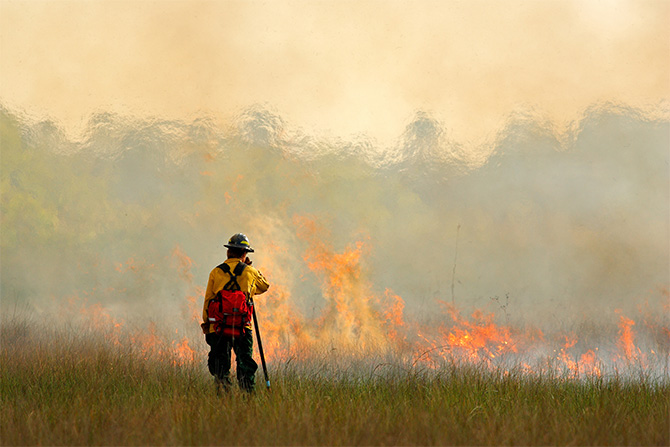

As wildfire seasons grow longer and more intense across the U.S., the financial implications for lenders and servicers are increasing. While most standard homeowners’ insurance policies technically cover fire-related damage, there’s a troubling trend emerging in wildfire-prone regions: exclusions or limitations on wildfire coverage.
This shift could leave critical gaps in protection, directly impacting your institution’s exposure.
The Coverage Gaps: Wildfire Exclusions
Standard property insurance often includes fire as a covered peril. However, in high-risk wildfire zones, insurers are increasingly:
- Raising wildfire-specific deductibles;
- Imposing coverage caps; or
- Excluding wildfire damage altogether.
This means your borrowers could be underinsured without even realizing it or might need to purchase additional wildfire-specific coverage. For banks, credit unions and mortgage servicers, this creates an elevated risk in portfolios tied to wildfire-prone geographies.
What Wildfire-Specific Policy Restrictions Mean for Your Portfolio
If your institution holds assets in areas where catastrophic wildfires are becoming more frequent — think California, Oregon, Arizona and parts of the Rockies — you may have unidentified and unmanaged risk lurking in your coverage monitoring process.
Identifying Insufficiencies in Wildfire Coverage
The first step in protecting your institution is identifying where your exposure lies, which starts with location-based risk awareness and a policy-level detail review.
Where Are the Wildfire High-Risk Areas?
FEMA offers a powerful tool to assess wildfire risk that combines both historical data and projected future conditions. Use this to identify hot spots in your portfolio:
- Read FEMA’s Wildfire Risk Overview.
- Explore the FEMA Risk Map.
Understanding these zones helps you prioritize reviews of borrower coverage in at-risk areas.
Digging Into the Policy Details
Insurers vary significantly in their approach to wildfire risk. That’s why a generic review isn’t enough.
You need to:
- Examine deductible structures for wildfire claims.
- Look for wildfire exclusions and limits in the policies.
These elements are often buried deep in policy declarations and endorsements, making them easy to miss without a rigorous insurance tracking process. Consider adding a partner offering insurance tracking services to ensure your institution’s assets are adequately covered and compliant with evolving wildfire risk standards.
Summary
As wildfire risks intensify, coverage gaps in standard policies are leaving lenders and servicers increasingly exposed. Proactively identifying high-risk areas, reviewing policy terms and confirming adequate borrower protection are essential steps to mitigate financial impact and strengthen portfolio resilience.